
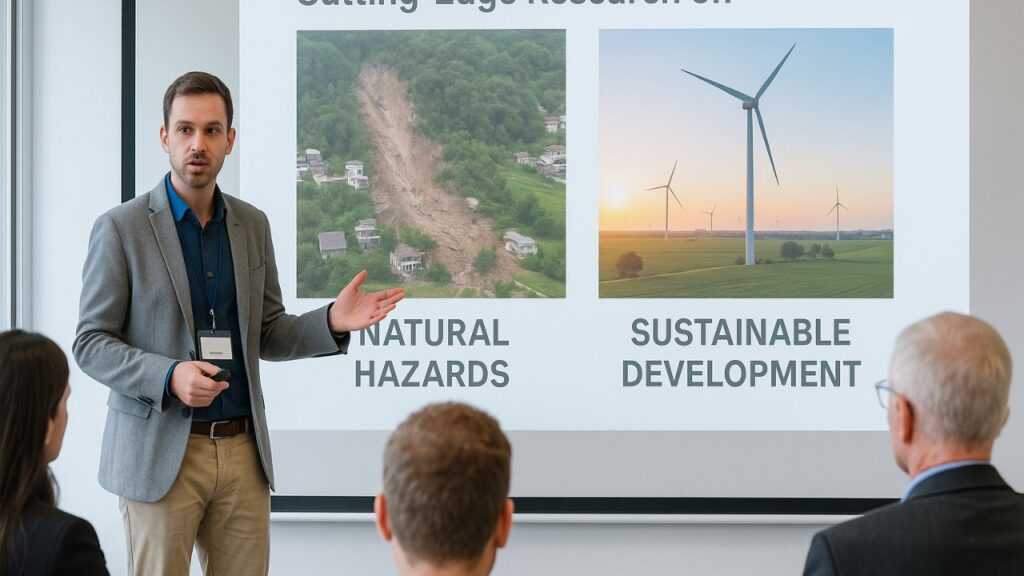
Research on Natural Hazards – The DEU-ISGR-23 symposium brought together world-renowned geoscientists, environmental researchers, and academic institutions to explore pressing global issues related to natural hazards and sustainable development. Hosted by Dokuz Eylül University, the symposium provided a vital platform for knowledge exchange, showcasing pioneering research on disaster risk reduction, geoscience applications, and the intersection of climate resilience with sustainable development goals (SDGs). The event served as a collaborative hub, fostering global dialogues between researchers from Asia, Europe, Africa, and the Americas. The highlight was the integration of community-led disaster preparedness models and data-driven environmental risk assessments, aimed at shaping practical solutions for vulnerable regions. For researchers, institutions, and policymakers alike, DEU-ISGR-23 affirmed the critical role of interdisciplinary collaboration in mitigating environmental risks and advancing equitable development pathways. The symposium’s proceedings attracted widespread attention, contributing to global discourse aligned with the goals of the United Nations Office for Disaster Risk Reduction (UNDRR) and the Sendai Framework for Disaster Risk Reduction (source: undrr.org).

Showcasing Global Innovations in Earth System Resilience and Risk Reduction
One of the most impactful dimensions of DEU-ISGR-23 was the presentation of novel methodologies in earth system resilience, such as early-warning mechanisms for landslides, earthquakes, and floods. Sessions on tectonic hazard modeling and predictive analytics in disaster zones provided insights into how geoinformatics and remote sensing are reshaping preparedness strategies. Scholars shared research using AI-powered satellite imagery, LiDAR technologies, and climate simulation tools to enhance precision in environmental forecasting. These innovations emphasized the importance of transdisciplinary research, where data scientists, geologists, and urban planners work in tandem. Contributions from institutions like the Global Earthquake Model Foundation and the Integrated Research on Disaster Risk (IRDR) network reflected cutting-edge international collaboration (preventionweb.net). By facilitating these discussions, DEU-ISGR-23 encouraged participants to think beyond traditional silos and adopt holistic approaches to natural hazard resilience across regions, especially in disaster-prone areas such as Southeast Asia, Sub-Saharan Africa, and the Eastern Mediterranean.
 Explore Conference Proceedings, Research Abstracts, and Keynote Sessions From the 2023 Event
Driving Academic Impact Through Open Access and Collaborative Research
A central aim of the DEU-ISGR-23 symposium was to make cutting-edge scientific knowledge widely accessible to support informed decision-making. With a strong focus on open access, several papers, posters, and video presentations were made publicly available through academic repositories and digital libraries. Notably, collaborative research between Turkish and international universities underscored the power of partnership in tackling shared environmental challenges. Topics ranged from coastal vulnerability assessment to climate-adaptive infrastructure and nature-based solutions for sustainable urban development. The involvement of youth researchers and PhD scholars added a dynamic layer to the event, with poster sessions reflecting grassroots innovation and fieldwork experiences. Resources such as the International Science Council’s platform for sustainability science and risk management were frequently cited to strengthen evidence-based discourse (council.science). Through open access and joint publications, DEU-ISGR-23 catalyzed the formation of new academic networks focused on resilience science, policy translation, and sustainable development planning.

Engaging Stakeholders Beyond Academia: From Local Communities to Policymakers
Unlike traditional academic symposia, DEU-ISGR-23 went beyond scholarly circles by inviting local government officials, community leaders, and NGO representatives to share lived experiences of disaster response and climate adaptation. Roundtable discussions focused on how scientific knowledge could be translated into actionable strategies for coastal cities, rural settlements, and urban informal communities. Case studies from the Aegean region, as well as examples from Indonesia, Nepal, and Mozambique, showcased how community-based disaster risk reduction (CBDRR) efforts are gaining traction globally. The interactive nature of the event helped bridge gaps between research institutions and those most affected by environmental change. By involving non-academic stakeholders, the symposium aligned with broader global frameworks like the Sustainable Development Goals, particularly SDG 11 (Sustainable Cities and Communities) and SDG 13 (Climate Action), as outlined by the United Nations Development Programme (undp.org).

Legacy of DEU-ISGR-23: Shaping the Future of Interdisciplinary Environmental Science
The DEU-ISGR-23 symposium marked a significant milestone in integrating geoscience, sustainability, and community resilience within a single academic dialogue. Its emphasis on open collaboration, youth participation, and real-world applicability ensures its legacy will continue to influence research agendas and policy decisions worldwide. The event’s proceedings are being compiled into an edited volume to serve as a reference for future environmental and disaster risk studies. Participating institutions have committed to establishing regional nodes of the International Network for Government Science Advice (INGSA) to foster long-term impact. As the threats posed by natural hazards and climate extremes grow more complex, the outcomes of DEU-ISGR-23 will help shape responsive, inclusive, and scientifically grounded solutions. The symposium reinforced the notion that sustainable development is inseparable from resilience science—and that knowledge sharing across borders is vital to protecting both people and the planet.
