
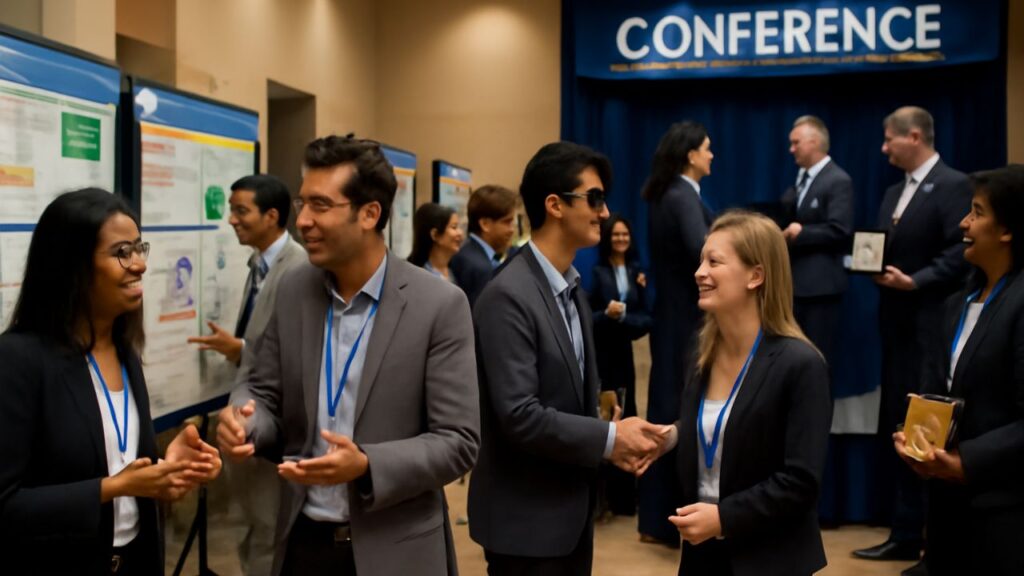
DEU-ISGR-23 – Student Sessions, Poster Presentations, and Awards Given at DEU-ISGR-23 highlighted the vital role of young researchers in shaping the future of geosciences and sustainability. The symposium served as a platform where students not only showcased their innovative ideas but also engaged in constructive discussions with experts from across the globe. These sessions helped in nurturing the next generation of scientists by encouraging knowledge-sharing, critical thinking, and collaborative problem-solving. Poster presentations allowed participants to visually communicate their research in an accessible way, making complex findings easier to understand for both academic and non-academic audiences. Furthermore, the awards ceremony recognized excellence and innovation, motivating participants to pursue impactful research. Such initiatives contribute significantly to advancing global dialogues on sustainability and earth sciences. By bridging academia and professional practice, DEU-ISGR-23 continues to foster an inclusive environment where young minds can thrive and play a decisive role in addressing pressing global challenges related to climate, environment, and sustainable development.
 About DEU-ISGR-23: Bridging Academia, Innovation, and Policy Through Global Scientific Dialogue
Empowering Students Through Interactive Sessions
Student sessions at DEU-ISGR-23 provided a dynamic environment for young researchers to present their ideas, receive constructive feedback, and build confidence. These interactive forums encouraged participants to refine their work and explore diverse perspectives by engaging with mentors, industry leaders, and academic peers. Sessions focused on critical themes such as sustainable energy, water resource management, and global climate adaptation, aligning with global priorities set by organizations like the United Nations Sustainable Development Goals. By giving students a voice in the international scientific community, the symposium promoted inclusivity and encouraged cross-border collaboration. Such opportunities are essential in preparing young professionals for leadership roles in global research and policy-making. Many participants emphasized how these sessions not only enhanced their technical knowledge but also improved their ability to communicate effectively in multidisciplinary settings, a skill increasingly valued in scientific and policy-oriented careers.
 Explore Multidisciplinary Contributions – From Environmental Policy to Earthquake Risk Assessment
Poster Presentations as a Gateway to Scientific Communication
Poster presentations at DEU-ISGR-23 acted as a vital medium for students to present their work in a concise, visually compelling format. This approach bridged the gap between complex academic research and broader audiences, ensuring accessibility and engagement. The posters covered a wide range of themes, from earthquake risk assessment to sustainable urban development, reflecting the diversity of modern geoscience challenges. According to best practices outlined by the Nature research journal, poster sessions remain one of the most effective methods for fostering dialogue, generating feedback, and building collaborations. Students used infographics, charts, and case studies to explain their findings, making the content engaging and memorable. The interactive nature of these presentations allowed for real-time discussions, questions, and networking opportunities. For many, this experience became a stepping stone toward publishing their work in peer-reviewed journals and gaining recognition within the international research community.

Awards Celebrating Excellence and Innovation
The awards ceremony at DEU-ISGR-23 was designed to celebrate outstanding contributions by students and early-career researchers. Recognitions ranged from best oral presentations to most innovative poster designs, reflecting a balanced appreciation for both content and communication. Such awards play a crucial role in motivating young scientists to push boundaries and explore innovative methodologies. Global examples, such as recognition programs by the European Geosciences Union, highlight the importance of acknowledging student contributions to ensure sustained engagement in scientific communities. At DEU-ISGR-23, awardees were applauded not only for their academic rigor but also for their ability to connect research outcomes with real-world sustainability challenges. This acknowledgment fosters a sense of belonging in international scientific dialogue, ensuring that students feel valued for their contributions. Many award recipients noted that this recognition would significantly influence their future career paths, inspiring them to further their research.

Building a Future-Oriented Research Culture
Beyond individual recognition, the integration of student sessions, poster presentations, and awards at DEU-ISGR-23 underscored a commitment to building a future-oriented research culture. These activities empowered young scholars to see themselves as integral players in global problem-solving, particularly in areas such as climate resilience, disaster management, and renewable energy. Studies by the Journal of Cleaner Production emphasize that engaging students in sustainability-focused research early in their careers has long-term benefits for innovation and policy impact. By fostering dialogue between academia, industry, and policy, the symposium created a platform where diverse stakeholders could work toward shared goals. The holistic structure of the event ensured that students were not passive participants but active contributors to shaping the research and innovation landscape. This approach highlights the core mission of DEU-ISGR-23: cultivating a global community where academic knowledge translates into sustainable solutions for pressing global challenges.
