
Discover Cross-Disciplinary – In an era where cascading threats—from escalating natural hazards to complex socio‑environmental challenges—demand coherent responses, cross‑disciplinary dialogues have emerged as vital. By bridging the methodological and conceptual gaps between earth scientists, disaster risk practitioners, and urban and regional planners, a richer understanding of systemic risk unfolds. For instance, natural hazard science contributes by characterising multi‑hazard environments and informing sustainable planning strategies through stakeholder collaboration and cultural integration, as outlined in expert frameworks to enhance resilience and align with the Sustainable Development Goals recommended actions for natural hazard scientists. Similarly, interdisciplinary trainings—such as those that foster convergence research—build capacity to transcend silos and deliver problem‑based solutions that integrate community needs and earth system dynamics. Such dialogues cultivate a shared language and collaborative infrastructure, enabling resilient, inclusive planning. They offer the promise of transforming how organizations like **DEUISGR23** can convene, synthesize, and operationalize knowledge—from geophysical insights to policy schemes—setting the stage for proactive, integrated strategies in disaster preparedness and sustainable development.

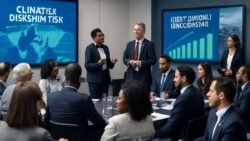 Learn From Global Experts Who Presented on Climate, Disaster Risk, and Sustainable Development
Dialogue between Earth Science and Planning
Earth scientists, by decoding the physical processes underlying hazards, provide the technical backbone for risk-informed planning. Dialogue with urban and regional planners ensures that geospatial hazard data translates into actionable land‑use zoning, early warning systems, and safe infrastructure design. In their work, natural hazard scientists are encouraged to characterise multi‑hazard environments, cultivate long‑term partnerships with stakeholders, and embed cultural understanding for inclusive risk reduction—approaches that are crucial for meaningful planning integration Nat. Hazards Earth Syst. Sci., Gill et al.. On the flip side, planners bring awareness of demographic vulnerabilities, governance frameworks, and spatial planning tools that ground scientific insights in lived realities. For organizations like DEUISGR23, enabling forums where these communities co-design shared mapping platforms or risk scenarios can spur resilient urban policies. By facilitating joint workshops, scenario drills, or boundary‑object tools, DEUISGR23 can play a pivotal role in shaping evidence‑based planning underpinned by earth science, thereby translating hazard maps into safety zones and resilient urban systems.

Interdisciplinary Integration: Social Science, Engineering, and Earth Science
True resilience arises when disaster risk reduction unites the natural sciences with engineering, social sciences, and community insights. The IRDR (Integrated Research on Disaster Risk) Science Plan advocates for bridging natural, socio‑economic, health, and engineering domains to reduce disaster risk through holistic research, capacity building, and public‑decision engagement IRDR Science Plan. Meanwhile, the concept of **convergence research**—promoted by platforms such as NSF’s CONVERGE facility—highlights how diverse, interdisciplinary teams can collaborate in novel ways to address complex hazards and promote collective well‑being CONVERGE convergence research. When social scientists, engineers, and earth scientists collaborate, they can tailor warning systems, risk communication strategies, and infrastructure designs that are contextually sensitive and technically robust. DEUISGR23 is ideally placed to catalyse such integration by supporting pilot studies or collaborative challenges that unite universities, local authorities, and civil society. By nurturing convergence, the organization could amplify its impact across research, policy, and implementation—helping communities anticipate, prepare, and respond to hazards in an integrated manner.
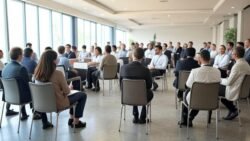
Community‑Centered Co‑Design of Resilience Measures
Resilience planning gains strength when it emerges from co‑creative dialogues between scientists, policymakers, and at‑risk communities. In western Uganda’s Rwenzori region, a dialogue‑based protocol brought together these stakeholders to co‑design flood risk reduction strategies. The process produced hybrid worldviews, nature‑based solutions, and equitable deliberations that aligned scientific knowledge with community values and sustainability goals community‑at‑risk co‑design protocol. Such locally grounded processes ensure that interventions are adoptable, optimizable over time, and deeply rooted in local ontologies. For DEUISGR23, championing community‑centered co‑design—perhaps through participatory mapping, stakeholder forums, or collaborative workshops—can build trust, legitimacy, and ownership of risk reduction measures. By facilitating knowledge fusion between data‑driven insights and lived experience, DEUISGR23 can help ensure that resilience planning serves both technical efficacy and community empowerment.
 DEU-ISGR-23 Symposium Bridged Science, Climate Risk, and Resilience Across Global Contexts
Innovation in Risk Planning: XR, AI, and Big Data
Emerging tools—ranging from extended reality (XR) to AI and big data—are redefining how we visualize, plan for, and manage disaster risks. A 2025 prototype called RoutScape leverages XR to help DRRM officers visualize flood scenarios and evacuation routes, using narrative‑driven geospatial representations to foster shared understanding and spatial sensemaking RoutScape XR flood planning. At the same time, interdisciplinary research is exploring how AI and big data, within legal and environmental frameworks, can transform disaster risk reduction—breaking down siloes between law, social sciences, and the natural sciences to create adaptive, equitable systems AI and big data in DRR. DEUISGR23 could explore partnerships with tech labs, universities, or NGOs to pilot XR‑based planning tools or AI‑driven risk analytics within its programs. By embracing innovation grounded in interdisciplinary ethics and governance, DEUISGR23 can position itself at the cutting edge—transforming traditional dialogues into immersive, data‑rich, and forward‑looking planning environments that enhance preparedness and inclusivity.
