
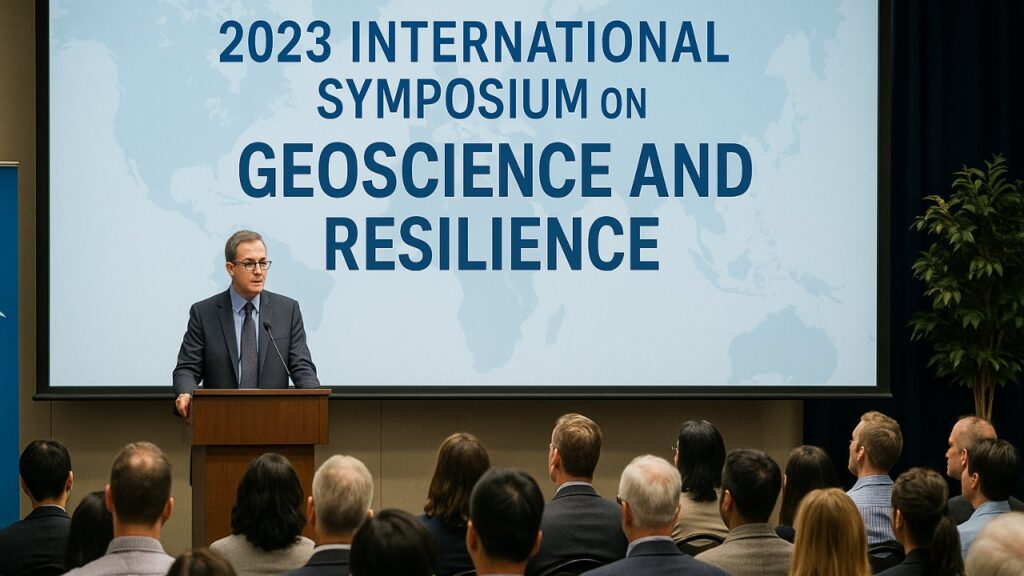
Geoscience and Resilience – The 2023 International Symposium on Geoscience and Resilience brought together leading scientists, policymakers, and innovators from across the globe to address pressing environmental challenges and strategies for adapting to climate change. The event highlighted the intersection of earth sciences with sustainable development, with discussions ranging from geological hazards to energy transitions and disaster preparedness. As natural disasters become more frequent and climate-related risks intensify, this symposium provided a platform for sharing research, fostering collaboration, and emphasizing the role of geoscience in building resilient societies. Experts underscored the importance of integrating geological knowledge into urban planning, resource management, and emergency response systems. The symposium also stressed the need for global partnerships and investments in early warning technologies, drawing attention to international commitments such as the United Nations’ Sendai Framework for Disaster Risk Reduction, which encourages science-driven solutions. By the end of the gathering, participants had reaffirmed the value of geoscience as both a scientific discipline and a vital contributor to long-term resilience planning.

Geoscience as a Tool for Climate Adaptation
One of the central themes at the symposium was how geoscience can be leveraged to strengthen climate adaptation measures. With the rise of unpredictable weather patterns and the increasing frequency of extreme events, geoscientists are working closely with climate experts to improve forecasting and preparedness. Discussions highlighted case studies where geological mapping and hazard modeling helped communities minimize the impacts of floods, earthquakes, and landslides. For example, improved geological surveys and data-driven hazard assessments have been critical for policymakers when designing safer cities and infrastructure. The symposium emphasized that resilience is not only about responding to disasters but also about proactively understanding the earth’s processes to reduce vulnerabilities before they become crises. Participants also stressed that geoscience education and community engagement are key in ensuring that local populations understand risk zones and are equipped with the knowledge to act quickly and effectively in the face of potential disasters.
 Explore Conference Proceedings, Research Abstracts, and Keynote Sessions From the 2023 Event
Technological Innovations for Disaster Preparedness
A significant highlight of the event was the focus on emerging technologies and their role in enhancing resilience. Experts showcased how satellite monitoring, artificial intelligence, and real-time data systems are revolutionizing disaster preparedness worldwide. Tools such as remote sensing allow scientists to monitor deforestation, land shifts, and glacial movements, which can serve as early indicators of environmental risks. According to NASA’s Earth Observatory, satellite imagery has already transformed the way governments anticipate and respond to disasters like wildfires and droughts. The symposium also explored the integration of AI in analyzing seismic data to predict earthquakes with greater accuracy. Participants agreed that such advancements can save lives and reduce economic losses if effectively implemented and shared across regions. However, experts cautioned that equitable access to these technologies remains a challenge, especially for developing nations, underscoring the need for international cooperation and funding support.

Building Global Partnerships for Resilience
Beyond scientific and technological advancements, the symposium emphasized the role of collaboration in addressing global resilience challenges. Representatives from international organizations, NGOs, and universities highlighted the success of cross-border initiatives in sharing research and resources. Programs supported by institutions such as the United Nations Environment Programme were recognized as critical in aligning local adaptation strategies with global sustainability goals. The discussions stressed that resilience cannot be achieved in isolation, as climate change and natural disasters often transcend political boundaries. Joint projects on sustainable water management, renewable energy transitions, and community-based adaptation models were showcased as examples of how partnerships are fostering resilience. The symposium concluded that while scientific breakthroughs are essential, their true value emerges when paired with collective action, inclusive policymaking, and knowledge exchange between regions with differing vulnerabilities and capacities.

The Future of Geoscience and Resilience Research
Looking ahead, the symposium called for a stronger focus on research that integrates earth sciences with social and economic dimensions of resilience. Delegates noted that building sustainable futures requires not only technical expertise but also an understanding of human behavior, cultural contexts, and governance systems. Future research priorities include expanding open-access data networks, investing in sustainable mining practices, and enhancing risk communication to bridge the gap between scientists and the public. According to IPCC reports, integrating geoscience findings into national climate strategies will be crucial in mitigating long-term risks and fostering adaptation. The event concluded with a call to action: governments, researchers, and communities must prioritize geoscience-informed resilience planning to safeguard future generations. With stronger collaboration, technological innovation, and inclusive research, the symposium reaffirmed that geoscience holds the key to navigating the challenges of a changing planet while ensuring human and environmental security.


