
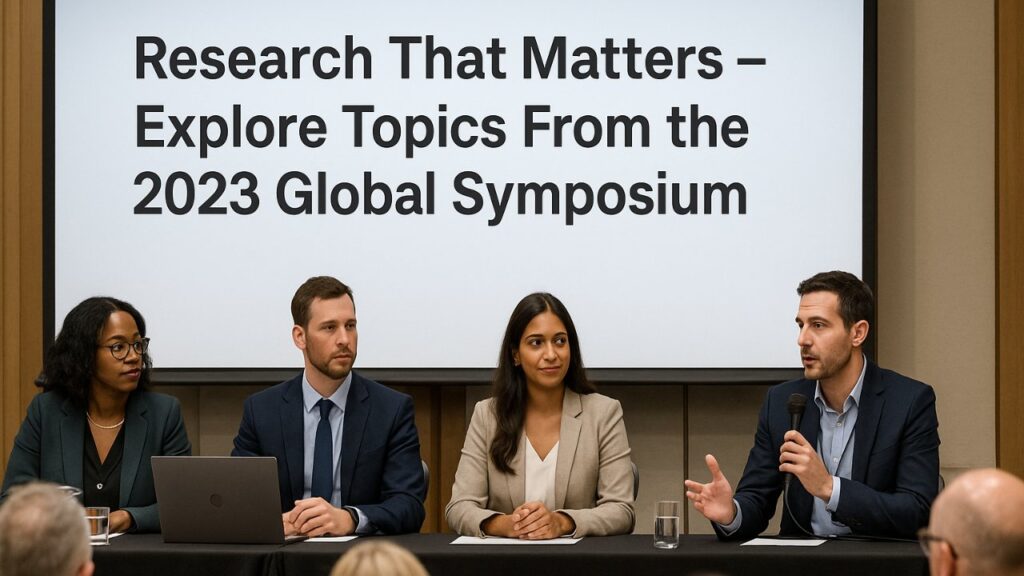
Global Symposium – Research That Matters – Explore Topics From the 2023 Global Symposium brings together an extraordinary range of ideas, findings, and forward-looking debates that influence global policy and academic progress. The symposium highlighted how collaborative knowledge can spark action on urgent issues like sustainability, technology, health, and ethics. Participants from across the world examined pressing questions that shape humanity’s future and shared valuable insights on how research can become a catalyst for positive transformation. What makes this event unique is its ability to blend scientific rigor with real-world applicability, ensuring that discussions move beyond theory and into practical solutions. From climate change mitigation to digital governance and from health equity to the role of education in shaping ethical societies, the themes explored were vast but interconnected. This international platform underscores how scholarship can move boundaries, encourage civic engagement, and ignite policies that promote peace, equality, and innovation. The 2023 Global Symposium truly demonstrates that research does not stay in books—it impacts lives.

Advancing Global Sustainability Through Science
Sustainability was at the heart of the 2023 Global Symposium, with researchers emphasizing the importance of tackling environmental challenges through innovation and policy alignment. Discussions focused on renewable energy, biodiversity protection, and climate action strategies, aligning with the goals of the United Nations Sustainable Development Goals. Scholars shared breakthrough findings on renewable technologies, such as solar and wind integration, as well as practical models for community-led conservation efforts. Sessions explored how nations can transition toward greener economies while balancing the social and economic dimensions of growth. The symposium highlighted the growing urgency to address issues like rising global temperatures, food security, and ecosystem degradation. Case studies from both developed and developing countries demonstrated that collaboration between governments, non-profits, and local communities is essential to make progress. By linking science to decision-making, the event showed how research can create sustainable frameworks that empower societies to thrive while protecting natural resources for future generations.

Technology, Innovation, and Human Progress
Another central theme of the 2023 Global Symposium was the transformative power of technology and innovation in driving human progress. Presenters analyzed the rapid evolution of artificial intelligence, biotechnology, and digital governance. Key debates examined how AI applications could be harnessed responsibly to improve healthcare, education, and economic opportunities, while also addressing ethical dilemmas such as privacy and bias. The event drew upon reports like those from the World Economic Forum, which stress that technological change must be people-centered. Participants explored how digital inclusion and equitable access to technology can reduce inequalities across regions. Innovations in medicine, robotics, and smart infrastructure were showcased as tools that can enhance resilience in times of crisis. Importantly, discussions moved beyond mere celebration of progress to question its impacts: how to ensure that technological revolutions do not marginalize vulnerable communities but instead create opportunities for empowerment and fairness worldwide.

Health, Equity, and Social Justice
Health equity and justice featured prominently in the symposium’s agenda, reflecting how pandemics and healthcare disparities have reshaped global priorities. Experts shared research on strengthening healthcare systems, increasing access to essential medicines, and tackling public health challenges such as mental health, malnutrition, and emerging diseases. A significant part of the debate drew on insights from the World Health Organization, which emphasizes universal health coverage as a pathway to equity. Panels also explored the intersection of health with social determinants like poverty, gender inequality, and environmental conditions. Real-life case studies demonstrated how community-driven health initiatives can bridge systemic gaps. The symposium urged policymakers to integrate research into healthcare reforms, ensuring that evidence-based practices lead to tangible improvements. The sessions on health equity served as a reminder that the right to health is not only a medical issue but also a question of justice, fairness, and human dignity that resonates across borders.

Ethics, Education, and Knowledge for the Future
The final set of discussions revolved around ethics, education, and the future of knowledge systems. Thought leaders stressed that advancing human progress requires not just technological or economic solutions but also ethical frameworks that guide decisions. Universities and institutions of learning were spotlighted as vital hubs for nurturing critical thinking, global citizenship, and moral responsibility. Sessions emphasized how education can be reimagined to prepare youth for a world of complexity and interconnected challenges, drawing upon research like that from UNESCO reports on education for sustainable development. Ethical questions related to data ownership, global inequality, and responsible leadership were debated extensively. Importantly, speakers pointed out that knowledge must be democratized and accessible so that it empowers communities rather than remaining confined to academic circles. This theme tied together the symposium’s overarching goal: that research, when grounded in ethics and shared inclusively, becomes a transformative force for shaping a just, equitable, and sustainable world.


