
Governance & Resilience – Exploring Insights From DEU-ISGR-23 – A Global Event on Risk, Governance & Resilience signifies a unique convergence of academic prowess, innovation, and an urgent dialogue around today’s most pressing global challenges. DEU-ISGR-23, organized by Dokuz Eylül University, brought together graduate researchers, experts, and practitioners across fields ranging from Geo Science & Technology to Data Science & Engineering. By integrating perspectives on risk assessment, governance frameworks, and resilience building, the event underscored how academic research can inform policy, bolster institutional preparedness, and foster sustainable development. As vulnerabilities from climate change, natural hazards, and societal disruptions escalate, such platforms become critical for harnessing new knowledge, computational tools, and cross-disciplinary collaboration. For DEU-ISGR-23, the blending of theoretical advances, empirical case studies, and application-oriented research enabled attendees to engage with real-world problems and solutions, paving the way for resilient societies and accountable governance around the globe.
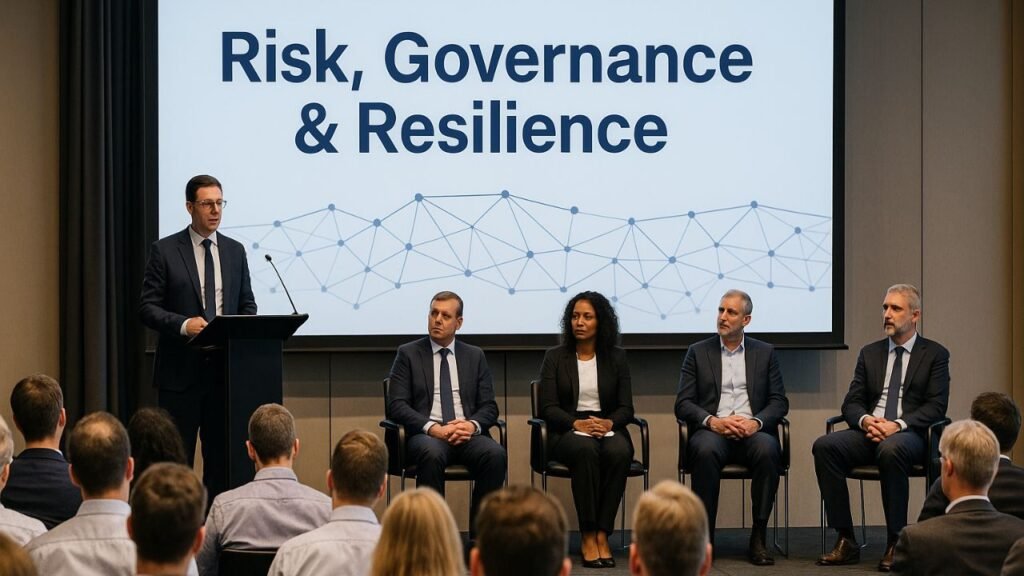

Risk Assessment & Emerging Threats in Research at DEU-ISGR-23
Risk assessment in its many forms—natural hazards, technological risk, infrastructural vulnerabilities, and climate-induced threats—was a central theme at DEU-ISGR-23. A standout presentation, *Evaluation of Artificial Neural Networks in Predicting Earthquake Magnitudes and Assessing Risks in Türkiye*, illustrated how AI models can forecast seismic activity with high accuracy (R² ~ 0.99). This not only demonstrates predictive power but also offers pathways for early warning and disaster mitigation, as discussed in ResearchGate. In parallel, global reports such as the *GAR Special Report 2023: Mapping resilience for the Sustainable Development Goals* emphasize that disasters are reversing development gains and highlight the urgency of investing in early warning systems and resilient infrastructure, as presented by UNDRR. Collectively, DEU-ISGR-23 highlighted that risk is not only a technical challenge but also a socio-political issue cascading through governance, urban planning, and institutional strength.

Governance, Policy & Institutional Resilience Strengthening
Governance was another critical pillar at DEU-ISGR-23, where discussions revolved around how institutions and communities translate scientific insight into resilience strategies. Presentations stressed the importance of regulatory frameworks, public engagement, and policy integration to ensure risk assessments lead to actionable change. The *GAR 2023 report* emphasizes governance models that align social, environmental, and economic resilience, reinforcing the need for integrated planning across sectors, as detailed on UNDRR. DEU-ISGR-23 contributions echoed this by highlighting cross-sector partnerships where universities, governments, and civil society work together on resilience strategies. Similar approaches are reflected in global conversations such as the *Risk & Resilience Virtual Summit*, hosted by Diligent, which explores the role of audit, compliance, and oversight in building robust institutions (Diligent). The shift toward anticipatory governance models—capable of adapting to change and absorbing shocks—was seen as essential for long-term resilience.

Integrating Technology & Innovation in Building Resilience
Technology and innovation played a prominent role at DEU-ISGR-23. Sessions demonstrated how Artificial Intelligence, machine learning, geospatial mapping, and hybrid models can be used to identify vulnerabilities and design responsive solutions. The earthquake prediction study employing Artificial Neural Networks exemplifies how advanced models can guide evacuation planning and infrastructural reinforcement (ResearchGate). Global analyses, like the *GAR 2023 special report*, show that early warning systems yield enormous benefits, particularly in vulnerable regions (UNDRR). DEU-ISGR-23 also examined governance innovations, including digital platforms for transparency, participatory monitoring, and inter-agency data sharing. The event underscored that technological innovation must be coupled with inclusivity and ethical practices to effectively strengthen resilience ecosystems, ensuring both human and digital capacities evolve in tandem.

Challenges, Lessons & Paths Forward from DEU-ISGR-23
Despite its achievements, DEU-ISGR-23 also revealed challenges that continue to obstruct global resilience. One major barrier is the lack of quality data in disaster-prone regions. For example, Türkiye benefits from comprehensive earthquake catalogues that enable precise ANN predictions, but similar datasets are scarce in other countries. Governance challenges—such as overlapping jurisdictions, limited budgets, and bureaucratic delays—further hinder implementation of effective resilience strategies. Insights from the *GAR 2023 report* show that resilience gaps often stem from weak infrastructure, social inequality, and environmental stressors (UNDRR). Lessons from DEU-ISGR-23 point toward solutions like investing in capacity building, fostering international cooperation, empowering marginalized communities, and designing inclusive governance systems. Looking ahead, a combination of scientific rigor, policy innovation, and technological advancement offers the clearest path toward resilient, equitable societies capable of withstanding the shocks of an uncertain future.
