
Goals of DEU-ISGR-23 – Exploring Earth’s interconnected systems has become one of the most urgent priorities in today’s research landscape, especially in the face of increasing climate change impacts, natural hazards, and socio-economic vulnerabilities. The DEU-ISGR-23 symposium has been carefully designed to address these pressing concerns by providing a global platform where scientists, policymakers, and industry leaders can engage in meaningful dialogue. The central aim is to explore the dynamics of Earth systems, the risks posed by environmental and human-induced factors, and the strategies for building resilience in communities worldwide. By bringing together perspectives from geology, sustainability studies, disaster management, and policy development, the event ensures a multidisciplinary approach that goes beyond traditional academic boundaries. In particular, DEU-ISGR-23 emphasizes collaboration and knowledge exchange to address shared challenges, supporting the development of solutions that can be scaled globally. With sessions dedicated to practical applications, advanced research findings, and future directions, the symposium highlights the urgent need for resilience-driven strategies for sustainable development.

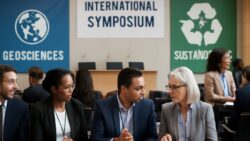 Keynote Speakers at DEU-ISGR-23 – Global Thought Leaders in Earth and Environmental Sciences
Understanding Earth Systems in a Changing World
Earth systems are complex networks of physical, chemical, and biological interactions that sustain life on our planet. At DEU-ISGR-23, researchers examine the interconnectedness of these systems, focusing on how changes in one domain can trigger cascading effects across others. For example, shifts in ocean currents influence weather extremes, which in turn impact agriculture, water security, and biodiversity. Studies from organizations like the Intergovernmental Panel on Climate Change (IPCC) reveal how climate systems are rapidly altering due to greenhouse gas emissions, intensifying the urgency for coordinated action. DEU-ISGR-23 aims to highlight this interconnectedness, helping participants understand how to assess risks, adapt policies, and integrate science into sustainable development goals. By combining insights from Earth sciences with socio-economic perspectives, the symposium provides a holistic understanding of how to manage natural resources while minimizing ecological disruption and safeguarding human livelihoods.
Keynote Speakers at DEU-ISGR-23 – Global Thought Leaders in Earth and Environmental Sciences
Addressing Global Risks and Building Resilience
Risk and resilience are central themes at DEU-ISGR-23, reflecting the growing demand for strategies to cope with disasters and environmental stresses. Natural hazards such as earthquakes, floods, and wildfires are no longer isolated incidents but are increasingly interlinked with human activity and urban growth. According to the United Nations Office for Disaster Risk Reduction (UNDRR), building resilience is essential not only for survival but also for long-term economic and social stability. The symposium addresses key questions: How can vulnerable communities prepare for recurring disasters? What role can technology and data analytics play in predicting risks? And how can governments and industries collaborate to ensure resilience-based planning? By exploring these issues, DEU-ISGR-23 underlines the need to transition from reactive to proactive strategies. It emphasizes policy frameworks, resilient infrastructure, and education that empower societies to withstand shocks and recover effectively, ensuring sustainability for future generations.

Promoting Sustainability Through Global Collaboration
Collaboration is the backbone of sustainable solutions, and DEU-ISGR-23 strongly advocates for cross-border partnerships in research, innovation, and governance. Environmental challenges such as climate change, biodiversity loss, and resource depletion cannot be solved by one nation or sector alone. Initiatives like the United Nations Sustainable Development Goals (SDGs) highlight the global commitment required to achieve meaningful change. At the symposium, scientists present case studies on international projects that tackle issues ranging from renewable energy integration to water conservation. Such examples prove that shared knowledge and resources amplify the effectiveness of solutions. Moreover, DEU-ISGR-23 provides a networking hub for young researchers and policymakers to collaborate, fostering mentorship and innovation. By nurturing a community that values diversity in expertise and geography, the symposium ensures that sustainability efforts are inclusive, equitable, and globally impactful, setting the stage for long-term resilience.
 DEU-ISGR-23 Recap – A Landmark International Research Event Hosted by Dokuz Eylül University
Future Goals and Impact of DEU-ISGR-23
Looking ahead, DEU-ISGR-23 positions itself as more than a single academic gathering; it serves as a catalyst for future collaborations and policy transformations. The outcomes of this symposium aim to inspire actionable frameworks that can be implemented by governments, research institutions, and industries worldwide. With a focus on data-driven strategies, participants are encouraged to align their work with global standards set by organizations like the United Nations Environment Programme (UNEP). Another significant goal is to empower youth and emerging scholars, ensuring that the next generation of scientists and leaders continues this critical dialogue. By documenting the findings and creating open-access platforms for research dissemination, DEU-ISGR-23 extends its impact beyond the event itself. Ultimately, the symposium underscores the importance of resilience in facing global uncertainties and positions itself as a pivotal step toward harmonizing science, policy, and sustainable development for a more secure and resilient future.
